 |
| Pillars of Hercules - welcome to English Harbor |
 |
| Unusual to see so many TALL ship lights |
Antiqua
– 3 weeks flew
After
our short stop in Montserrat – the anchorage in Little Bay rolls at the best of
times, we headed east to Antigua. Easterly headings are usually directly into
the prevailing winds and although we were fortunate to have only 3 to 4 foot seas,
it was enough to slow our progress and make for a lumpy ride. On the bright side, the day was relatively
short and we were tied to a mooring in Falmouth Bay in early afternoon with
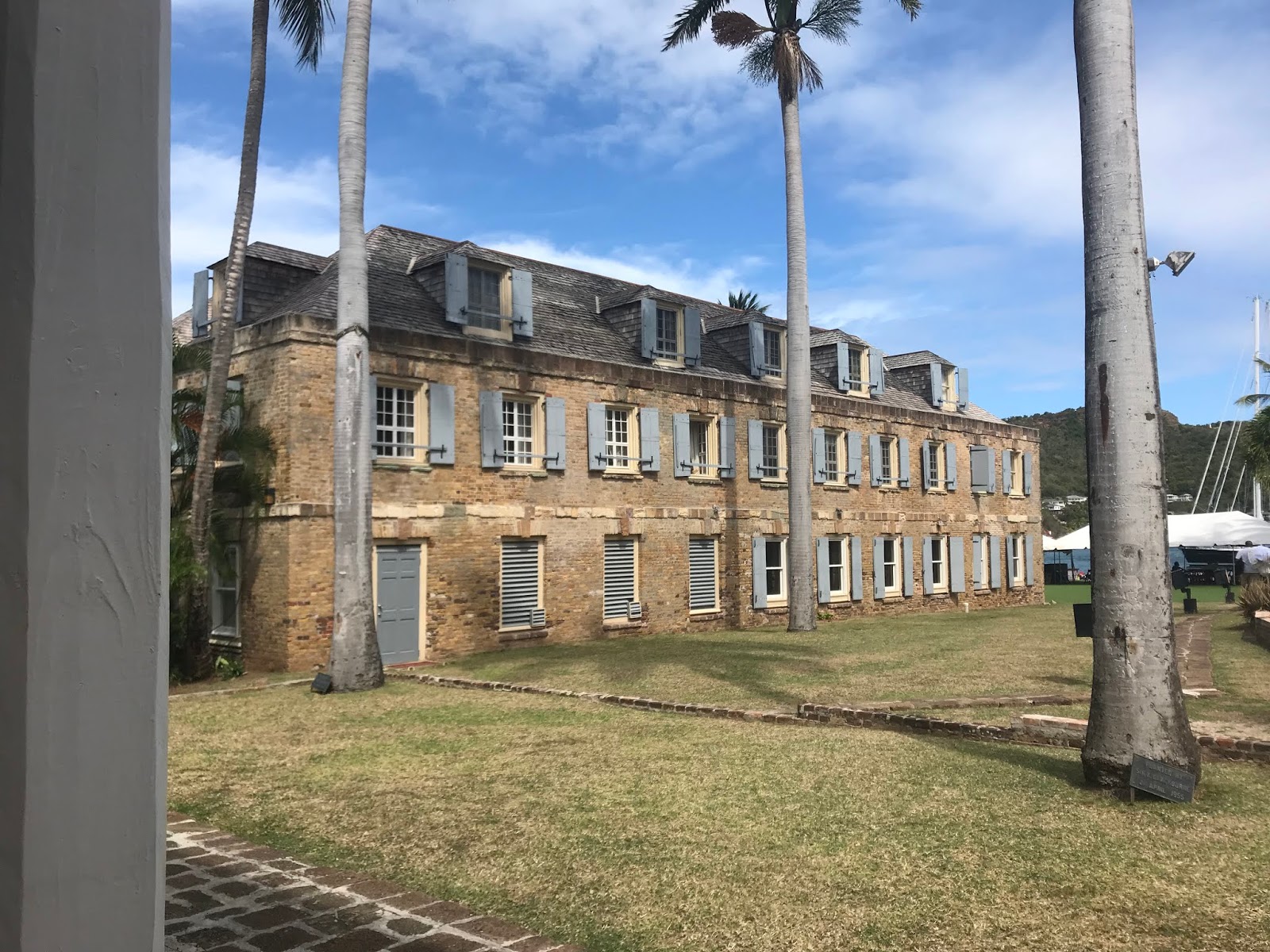
time for Steve to visit the customs and immigration folks in the historic
Nelson Dockyards.
 |
| Entrance to Dockyards Customs Office |
The two harbors – English Harbour and Falmouth Bay are
separated by a narrow strip of land and together they provide some of the best
protected anchorage in the Caribbean. As a result, they are popular and crowded
with boaters from its earliest discovery by Europeans. All manner of services is
available for boaters so it is a good place to hang out and fix whatever needs
fixing. Or, just hang out and enjoy the scene. In addition, Antigua has historic
British connections so English is the main language. The direct flights from
London and regular cruise ship visits bring lots of tourists to enjoy the
beaches and historic sites. One of these
is the restored and vibrant Nelson Dockyard complex. It is a UNESCO world
heritage site and uniquely combines the feel of the 18th century
fortress with a living marina, hotel, and shopping destination. We treated
ourselves to lunch at the Pillars Restaurant to enjoy this combination of old
and new for a relaxing afternoon on their shaded patio.


 |
| Old Bakery and Ovens |


We also hiked the
Middle Ground Path or better known as the “goat path” – mind where you step! It
connects the two bays via an up and down route through several old lookout and
gunnery placements which offer spectacular views of the island and surrounding
seas.


Sunday
afternoon we opted to taxi up to the restaurant at Shirley Heights on the south
side of English Harbour to enjoy their BBQ and listen to the steel drum band.
This is another complex of old fortifications restored but also re-purposed for
modern use. As one boater told us, just about everyone on the island shows up
for the weekly event – some dressed up in fancy, fancy outfits and others very
beach casual plus a lot in between!


Frequent
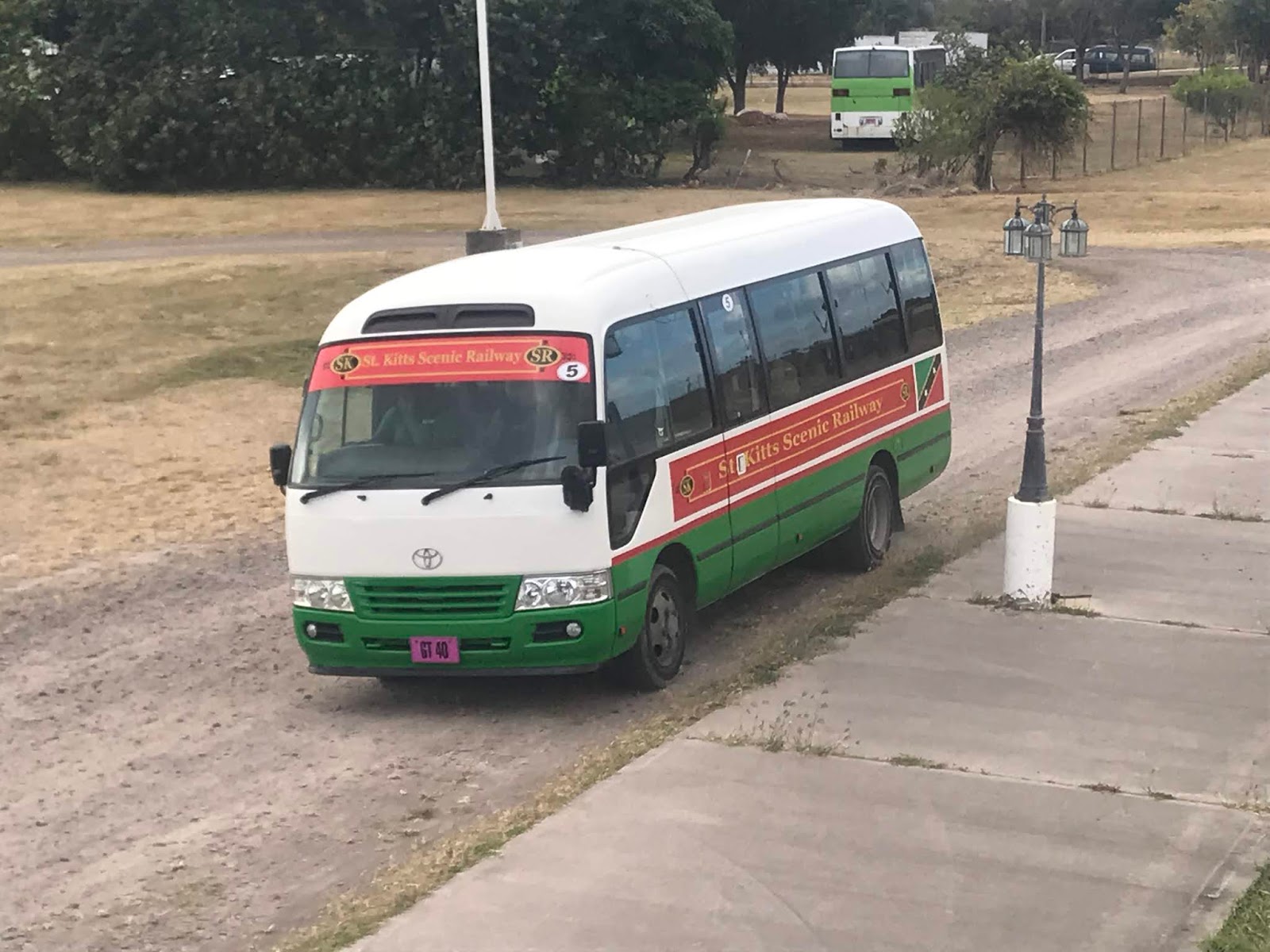
local buses run from the English Harbour area to the capitol city of St John
about 10 miles away. Steve needed to
have another x-ray taken of the wrist he injured back in late December so we
flagged a bus heading to the clinic on the outskirts of St John. While we had
read about the typical bus services in the islands, this was our first
experience. First, they are very reasonably priced – our round trip for both of
us was about 6 dollars US. The comfort and panache vary widely. We rode on
almost new larger vehicles as well as rough, rugged, and falling apart
contraptions. All of them got us to our
destinations! However, the system for
picking up passengers is somewhat different.
The bus heading into town picks up passengers until he is full only
stopping to pick up again if someone gets off.
On the other hand, from town, most buses don’t leave until they are
full. The passengers must wait until all
the seats are occupied. Since the buses
run fairly often the wait is usually not long on popular routes – it can be
much longer if the route is not a popular one, however. While there are
designated bus stops with good signage and even a few with shelters, riders can
flag buses almost anywhere. It might seem obvious, but this is a good trick on
the narrow roads. Other traffic either
goes around – hoping to avoid any oncoming cars or they wait for riders to get
on and off. Stopping the bus is another trick – there were no buzzers or
buttons to push – but the rider simply says “bus stop”. If it is not loud
enough, (all the buses included music to the taste of the driver) the other
passengers relay and the bus echoes with “BUS STOP”…..
Have
also to mention the driving habits on Antigua. The roads are narrow and
vehicles drive FAST! Plus they are all driving on the wrong side of the road!
Buses especially are in a hurry since time is money. They zoom past slower cars weaving in and out
of parked vehicles and on coming traffic.
It can be an adventure to travel by road in Antigua! After all, our boat
rarely gets above 7 mph.


 |
| museum entrance in old court house |


While
waiting for the Classic Boat Regatta – Easter Weekend, we took a few side
trips. First, we anchored off Jolly
Harbour. This is another popular stop
for boaters and home to a large charter fleet of catamarans. There are several
man-made canals around the main harbor with a variety of condos and homes. The
marina area has several restaurants, a Budget Marine store and an Epicurean
Grocery. This is a sister store to the main mega grocery in St John’s which we
visited by bus. Although much smaller than the mother store, it seemed to have
the same vast variety of food options from fresh through frozen and
canned. There is nothing that can’t be
found here. Wandering these aisles, one could be in any Publix or Harris Teeter
or in some cases even better since these stores stock British cheeses,
condiments, and crackers.
 |
| no lack of interesting food choices |
While visiting the dentist – don’t ask – we
discovered a lady who sells baked goodies from her trunk and her regular
schedule includes Jolly Harbour so we were also able to replenish the bread and
treats before moving on.

Just
about the only down side to this anchorage is the long and slow (5mph) no wake
trek into the docks.
Our
second stop was around on the east side of the island behind Great Bird
Island. This is a protected area to
preserve the marine life here and includes a few free moorings. It is also sheltered from the prevailing east
winds by the reef so it provided a nice stop to relax and explore the reefs and
work on our kayak skills. Although it was too windy and rough for the kayakers,
there was some snorkeling and harvesting to be had. We also met fellow boaters Lynn & Mike on
Time 2 and Fiona & Mark on Avatar, plus Xavier a single handing sailor. We
managed to enjoy lobster pizza in this scenic and secluded anchorage.


With
a stop at Jolly to resupply, we moved back to Falmouth Harbour to observe the
classic boats of all sizes that raced in the regatta. Races were held over four
days – usually the boats began parading by on their way out of the harbor about
9 in the morning and returned late afternoon.
The boats circled at the end of the harbor just before the inlet to
hoist their sails. The weather cooperated for all the races with brisk winds so
lots of big sails were seen. We could
see some of the racing from our boat, but the best views were from the look out
at Fort Berkley in English Harbour…..that is unless one was brave enough to
take the dink out into the open water to get close like our friends Lynn and
Mike did. Their pics are spectacular! We
did walk the docks several evenings to drool over the beautiful boats from the
tiny ones to the massive 200 footers. Our favorite was the Columbia – probably
mostly because we share her home port of Panama City, Florida. (We did hear she
is for sale, so that might change.) Just as the racing events and festivities
came to a close the weather settled and we are headed out for our next
country. Thanks to our new friends we
are armed with lots of info on where to go and the best places to have fun as
we head on south.
boat pics:


 |
| not "classic" but unique |
 |
| Not all the boats in the harbor were classic or beautiful |