Puerto
Rico – a unique slice of the USA
Our
journey through this island began on the west coast in Puerto Real. The kind
and helpful Jose got us in our slip and offered advice for our travels on both
land and sea. Many thanks to him for his
courteous guidance and suggestions.
With
the help of Jose, we rented a car to visit the big city of Mayaguez for a trip
to the HOME Depot and SAM’s CLUB. On the ride we passed colorful homes, lush
tropical vegetation and unique roadside eateries. The feel of a “foreign” and
exotic land persisted until we reached the outskirts of town and spotted a
McDonalds, Burger King, KFC and other American icons. However, it was very helpful to find the
replacement water pressure tank that we needed for the boat at the Home Depot and
stock up with heavy items from Sam’s. The bilingual signs were the only clue
that we were not in a mainland store. To return to the local flavor we
continued on to the beach town of Rincon for a light lunch on the shore where
visitors were paddle boarding in tropical splendor.


Back
at the marina, we were fortunate to be included in the annual holiday feast.
The highlight of the meal was roast pork…. A whole roasted pig. The venue was festive among lights and
candles and great food with like-minded boaters. Then there was the live band
to top off the festivities. Thanks again
to all the staff and especially Jose for this wonderful evening. Puerto Rico is
famous for the happy people and in only a few days we have seen why they have
this reputation.


With
the new tank installed, we continued on to round the western end of the island
and to hop along the southern coast.
Our
stop at the southwest corner was to visit the lighthouse at Cabo Rojo – Red
Cape. This beautiful structure has been restored and is worth the short climb
from the beach both for the view and the historical information in the building
beneath the light. From the deck on the second level we even could see our boat
resting at anchor in the small bay. Our round trip included the beautiful beach
on the south side which is home to several turtle nests.


We
planned to make short runs most days from 6 to 20 miles and spend hours
exploring the reefs as well as shoreside delights.
The
keys of La Parguera were our next stop.
This town is a lively tourist destination with colorful restaurants and
boat trips to the keys off shore a major attraction. We tied to one of the free moorings and were
entertained by the boats that spent the day enjoying the shallow water off the
mangrove key. One evening we took a dink ride to a phosphorescent bay where the
water sparkled with the bioluminescence. We also harvested a lobster from the
local fishermen’s coop for a tasty dinner.
The town also boasted many restaurants, a well-stocked grocery store,
and a café/bakery full of treats.


Next,
we stopped at Gilligan’s Island – a protected anchorage off another set of
mangrove islands. Here we stopped for
lunch at the San Juan Restaurant located at the ferry dock for service to the
keys. The food was excellent and at very reasonable prices, but the décor was
even more spectacular. The owners were
also very friendly and welcoming.


The
big city of Ponce was our next stop. The city, named after Ponce de Leon, is
the second largest city on the island. Fortunately, it is was mostly spared the
devastation of Maria so the wealth of colonial architecture was on view. The city is centered around the Cathedral and
restored Firehouse with plazas on each side.
Around this park are the historic commercial heart and many of the
traditional buildings. We stopped at the
history museum for a comprehensive tour in English. The contents of the museum were as
interesting at the structure – a former home of a prominent doctor. On the
recommendation of Jose – the owner of the Pescadoria marina, we also spent
several hours at the art museum – with works from the 1300s to today. The
majority of the collection comes from one man, Luis A. Ferre, who gathered the
works with a plan to give them to his home town. From its start with 71 works
of art, it has now grown to over 4500. An unexpected gem in this charming town. (We also met Jose at the marina where he delivered a mail drop that we had sent to his marina - service above and beyond!)


Next
to the marina and harbor where we were anchored was the boardwalk called La
Gauncha – a very lively spot which also provided musical entertainment into the
wee hours. A couple nights in the harbor were enough, so we hopped over to
Coffin Island – Caja Muerto which supposedly resembles a coffin. However, we were told in the museum that it
was also the place that passing ships left their dead. The island has an arid
climate and surprisingly large cactus dominate the flora. As a change of pace, we hiked up to the
lighthouse. The view was spectacular but
sadly the building has not been restored like the one we saw in Cabo Rojo.


Continuing
east we stopped in the very crowded and protected harbor of Salinas. We
actually spent a couple days then moved for a few days into the mangrove bays
nearby. These bays are secure hurricane
holes where many boats weathered the ravages of Maria in 2017. We met cruisers who stayed during the storm
with only minor damage and one who then helped salvage more than 30 boats who
were not so lucky. Our objective was to
practice and master our new kayak in the scenic and protected waters of the
mangroves. Surprisingly not a lot of
bird life on our visit nor did we see the manatees that are reported to
frequent the bays, but we did spend a few hours on the kayak – enough to work
up a few blisters and put gloves on the shopping list. Returning to Salinas to
wait out the Christmas Winds, we walked into the town center to visit the
grocery store. This was a unique
experience. The store infrastructure was
normal for a full-size grocery, but the shelves were largely empty – the huge
produce section had items clumped in only a few skimpy spots and the regular
shelves were much the same. Large sections
with nothing or all the same item. It was kind of spooky wandering the aisles,
but the staff was smiling and very friendly helping with our limited Spanish. We
never discovered if the mostly empty shelves were due to the hurricanes of 2017
or a general change in the local shopping habits.


Taking
a brief lull in the winds we headed to the town of Las Patillas – making the trip in the morning, calmest
time of the day. Arrival here was
another surprise. Although Patillas is
also on the Southern side of the island, it is no longer the arid landscape we
had seen further west. Somewhere along the 20-mile route we crossed a rain zone
since Patillas was green and tropical. It was also a Sunday in a popular
beach/shore hot spot. We anchored off the town/village and dinked into the
beach which was still relatively quiet when we arrived about noon. Things got much livelier as the afternoon
wore on, but fortunately this was not a late-night draw at least on a Sunday. Puerto Ricans, we have discovered, LOVE LOUD
MUSIC. Mostly that has been fun to enjoy – especially from the slight distance
of an anchorage; however, when the jocularity continues into the wee hours, it
wears thin. For lunch we enjoyed the local Frappe stand with empanadas on the
side!
Leaving
at 0500, we finally, rounded the eastern end of the island for the marina
Palmas Del Mar with a view of Vieques Island. Here we took time for a little
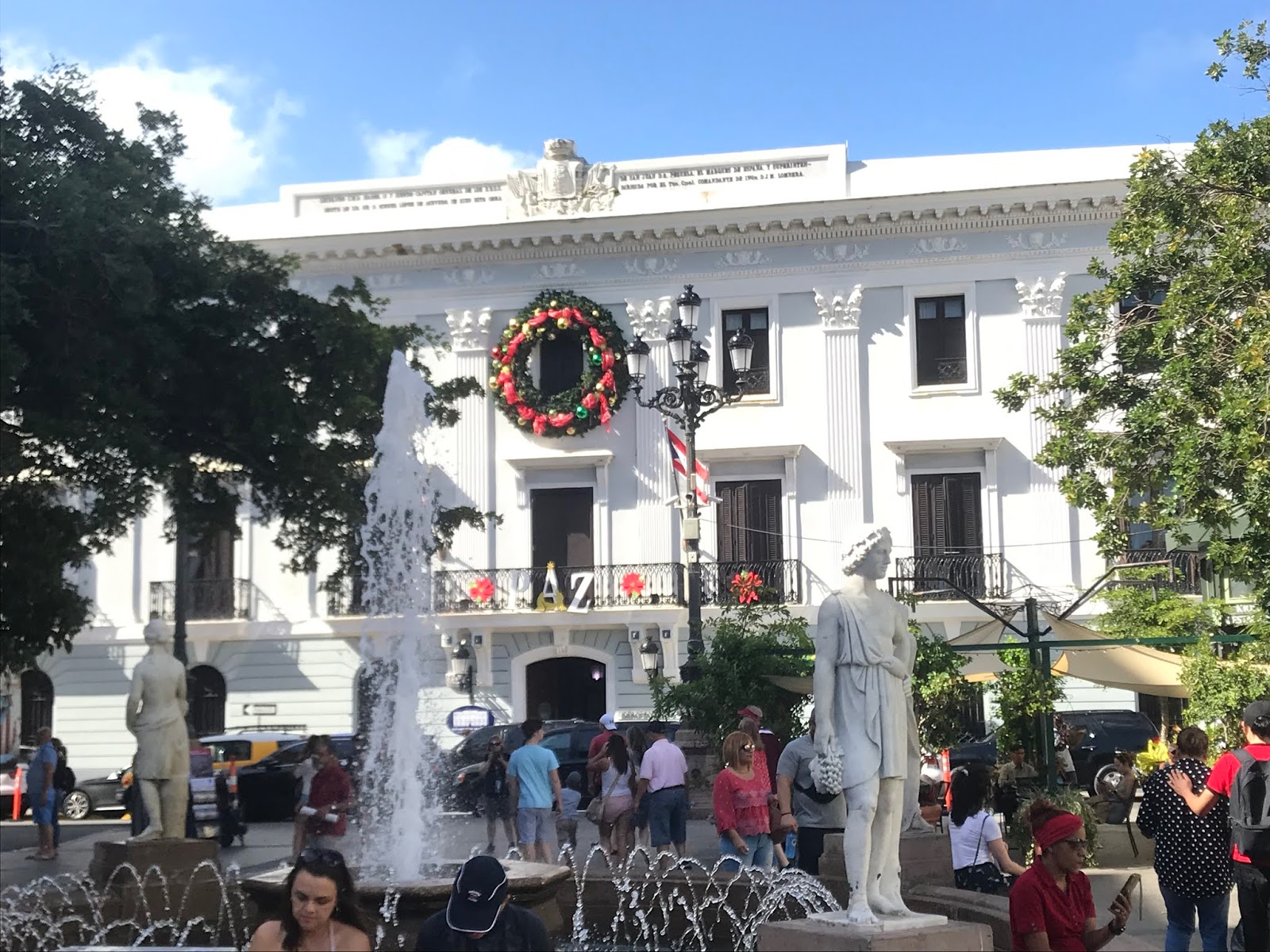
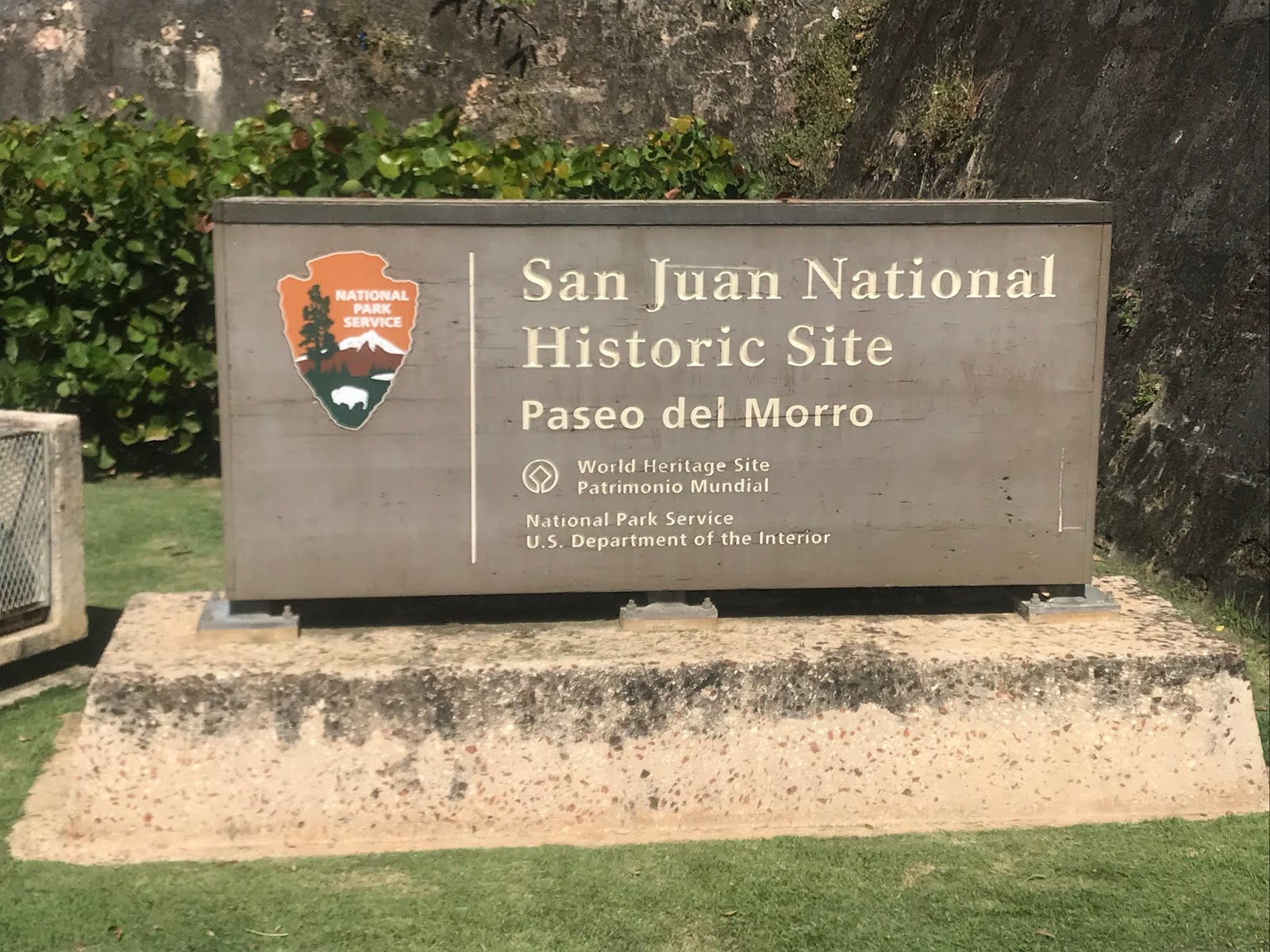
exploration on land. First to the rain
forest (with some shopping attached) and second into Old San Juan. It was nice
to see that this historic city has largely recovered from the destruction
caused by Maria just over a year ago.
However, we heard from one old town shop keeper that they were without
power for more than six months. The loss
of business was more than 150 days so it was great to see the huge cruise ship
and the streets full of tourists enjoying the shops and sites of this beautiful
town among the oldest continuously occupied in the new world. The impressive
fortifications speak to its strategic importance in the trade routes between
Europe and the West.






We
extended our stay partly because of those persistent Christmas Winds, but also
to get some medical tests done for PSE and to prep our Teddy for the British
Virgin Islands. It was also nice the
marina was doing a special rate for the holidays!
We
made several stops on Vieques – most importantly to visit another
phosphorescent bay before lingering in the Culebra area to walk the famous
Flamingo Beach. (We did make a brief
return to Palmas to pick up new credit cards – fraud is still a part of our
lives.)
Many
of our stops were recommended by Jose, our host at the marina Pescadoria in
Puerto Real/ Cabo Rojo. It is hard to understand why the riches of Puerto Rico
cruising grounds are not better publicized and more frequently visited by
cruisers. For us this was a delightful,
friendly, and easy destination. In the end we finally had to move on …. After more
than a month the Virgin Islands were calling us.